This article contains affiliate links. If you book through them, I earn a small commission at no extra cost to you.
The flight attendant said something over the intercom, and the whole cabin leaned toward the windows on the left side of the plane. I had been staring at open ocean for four and a half hours — nothing but water from horizon to horizon, the most water I had ever seen in my life — and then suddenly there it was. A triangle of green and brown, barely bigger than a thumbprint against all that blue. Easter Island. Rapa Nui. One of the most isolated inhabited places on Earth, sitting 3,700 kilometers off the coast of Chile with absolutely nothing between it and Tahiti. The woman next to me whispered something in Spanish I did not catch, and I felt my chest tighten in a way that had nothing to do with the cabin pressure.
Six days later, standing in the airport waiting for the return flight to Santiago, I had a sunburn on my nose, sore calves from cycling dirt roads, and the strange feeling that I had just visited somewhere that did not entirely belong to the modern world. Easter Island is technically part of Chile, but it does not feel like Chile. It does not feel like anywhere. The moai — those massive stone figures that most people know from photos — are only a fraction of what makes this place extraordinary. The volcanic craters, the oral history, the isolation itself — all of it compounds into something I have not experienced anywhere else in fifteen years of travel.
Here is everything I learned, everything I spent too much money on, and everything I wish someone had told me before I went.
The Flight Over Nothing (Getting to Easter Island)
There is exactly one way to reach Easter Island as a tourist: a LATAM flight from Santiago's Arturo Merino Benitez International Airport. That is it. No ferries, no cruise ships that stop regularly, no alternative airlines. LATAM operates daily flights during peak season (December through March) and roughly four to five per week during the rest of the year. The flight takes between five and five and a half hours depending on winds.
I paid around $450 USD roundtrip booking about two months out, which locals told me was decent but not great. If you book three or four months ahead, you can sometimes find roundtrips for $300-350. During Tapati festival in February, prices spike hard — $600+ is common. LATAM has a near-monopoly on this route and they know it.
One thing that caught me off guard: Easter Island has its own immigration-style checkpoint. Even though it is Chilean territory, you need to fill out a Formulario Unico de Ingreso (FUI) online before you travel, show proof of accommodation, and present a return ticket. They are serious about this. A couple in front of me at the PDI desk in Santiago had not filled out the FUI and were pulled aside for twenty minutes of paperwork. Do it before you get to the airport.
The flight departs from Terminal 1 (domestic) in Santiago, and there is a dedicated queue for Isla de Pascua passengers at passport control. Follow the signs — it is straightforward once you know to look for them. If you are planning your travel logistics around Chile, build in a buffer day in Santiago before and after. Flights can and do get delayed or cancelled due to weather on the island, and there is no plan B.
Quick Tip
Book a window seat on the left side of the plane for the approach. The island appears on the port side and the view of this tiny speck of land surrounded by endless Pacific is one of the most dramatic arrivals I have experienced anywhere.
Sunrise at Tongariki (and Why You Will Set an Alarm You Hate)
My alarm went off at 5:15am on the second morning and I wanted to throw my phone into the ocean. The bed was comfortable. The room was dark. I had stayed up too late the night before drinking pisco sours at a restaurant in Hanga Roa. But the guide I had hired for the day had said one thing during our planning call that stuck: "Tongariki at sunrise is the reason most people come to this island."
He was not exaggerating.
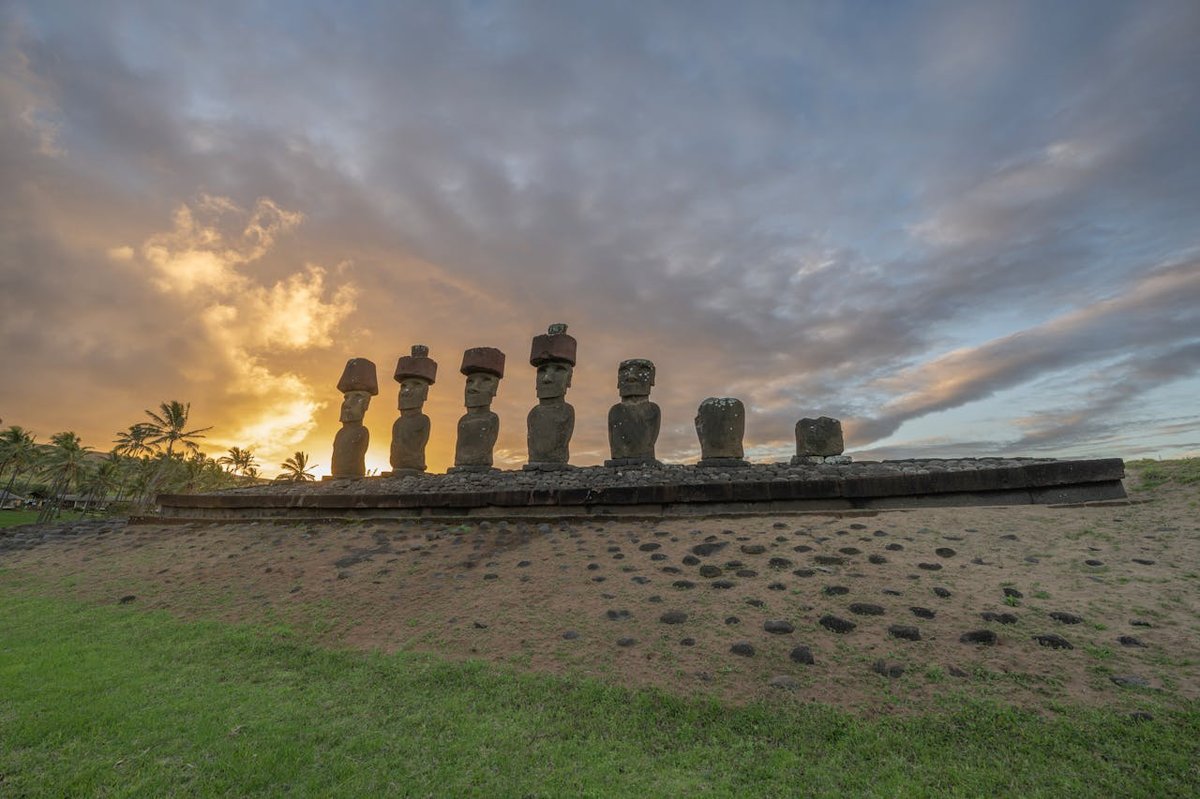
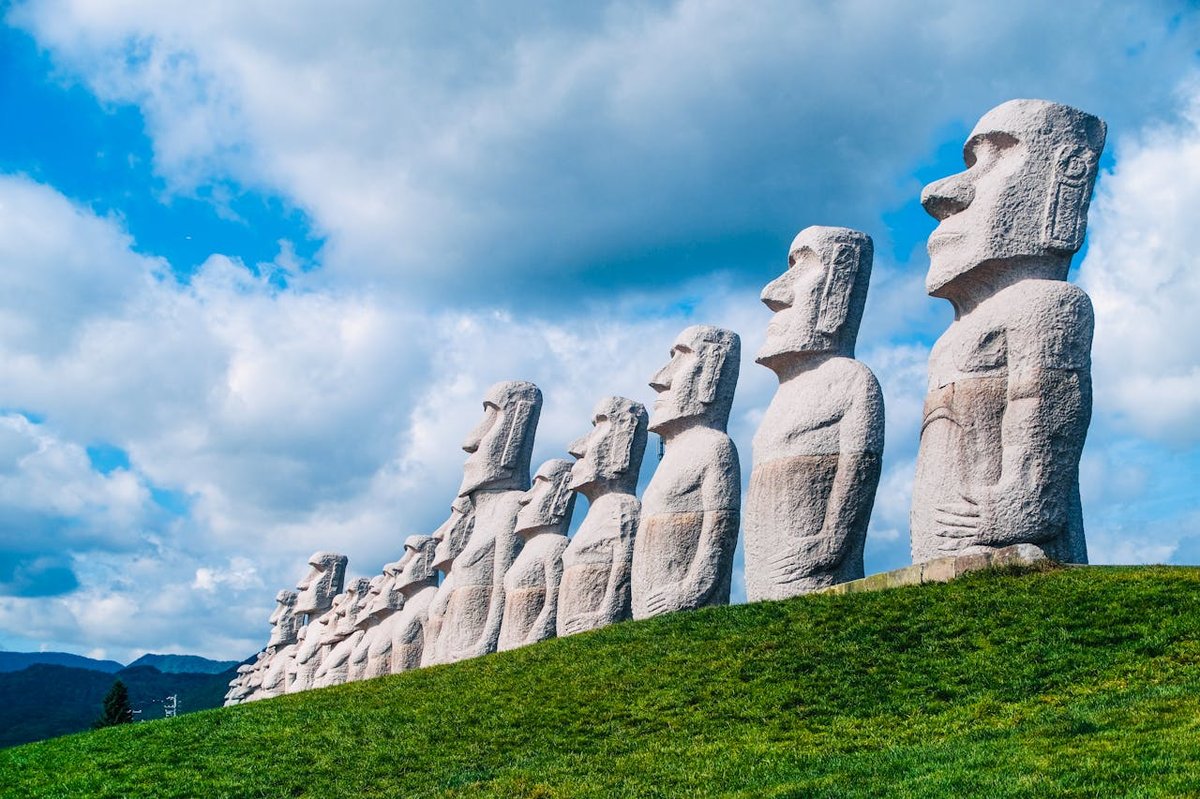
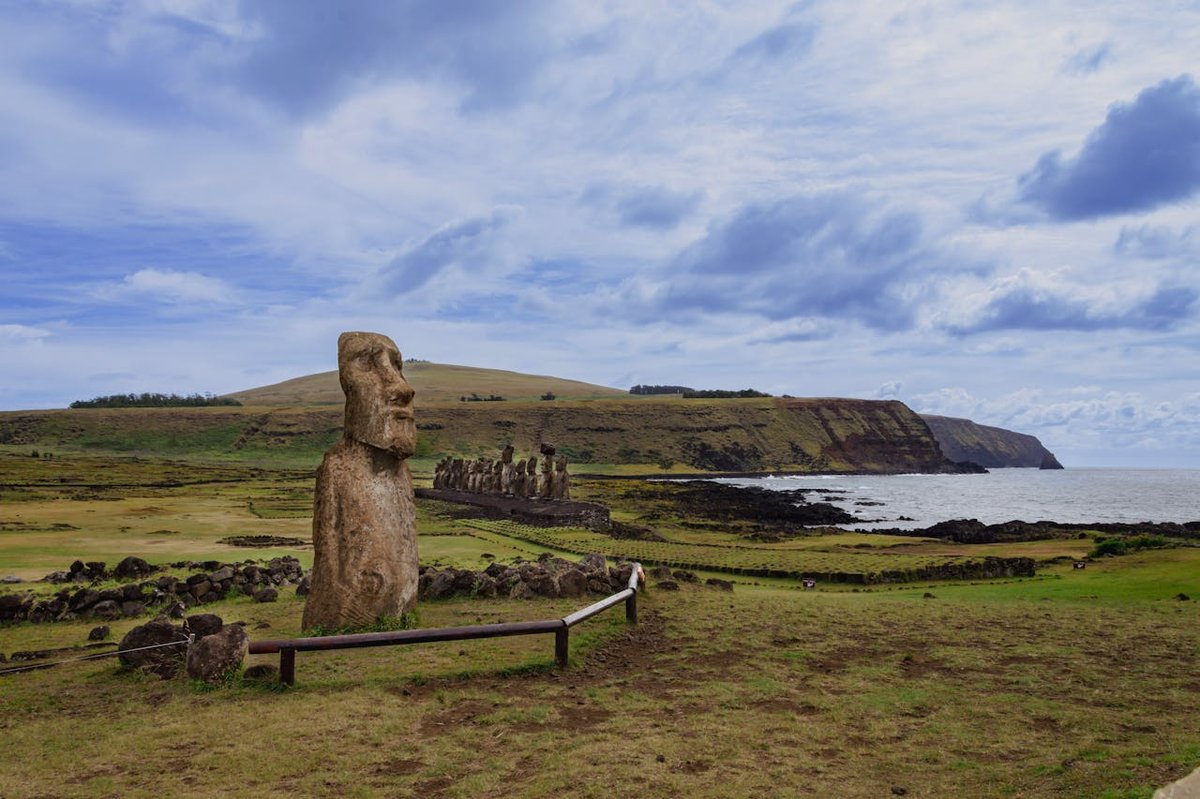
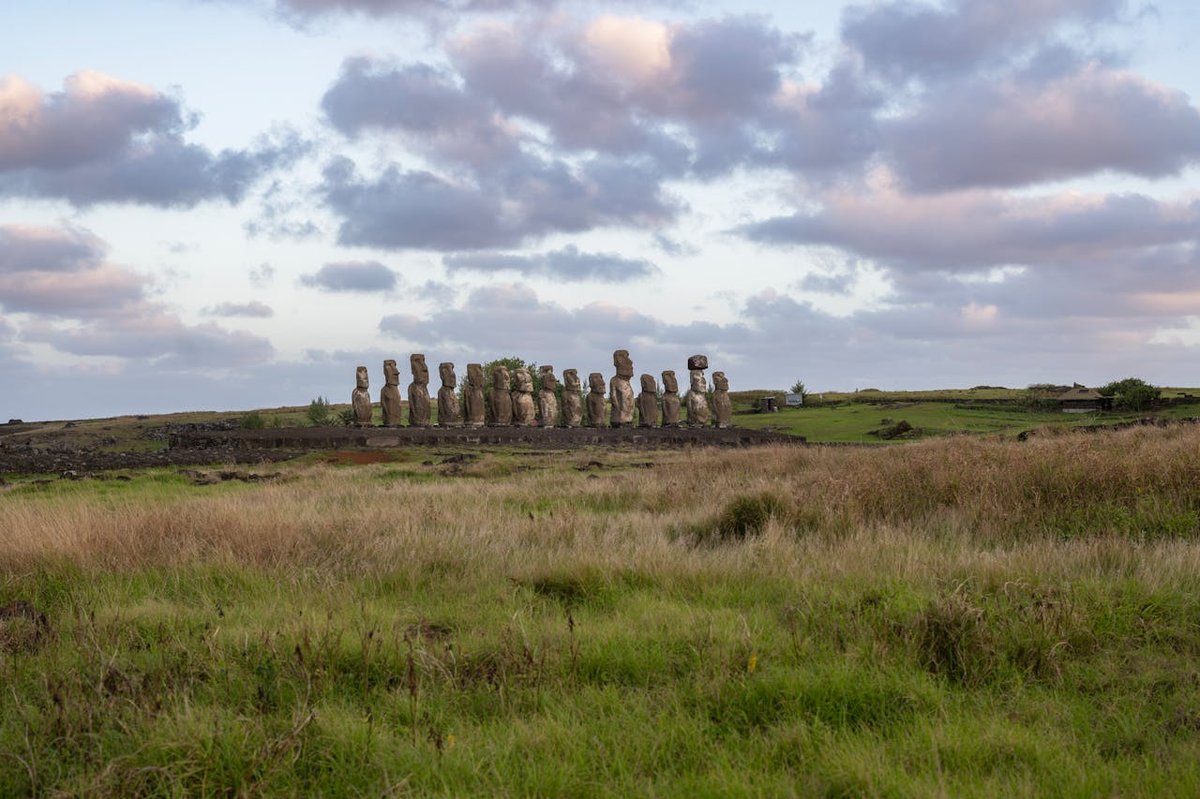
Ahu Tongariki is the largest ahu (stone platform) on the island, with fifteen moai standing in a row facing inland. They were toppled during the island's civil conflicts centuries ago, scattered by a tsunami in 1960, and painstakingly restored by a Chilean-Japanese team in the 1990s. At sunrise, the sun comes up directly behind them from the Pacific, and for about twenty minutes the moai become black silhouettes against a sky that cycles through pink, orange, gold, and pale blue. The scale is hard to convey — the largest moai here stands over 12 meters tall, and the whole platform stretches maybe 100 meters end to end.
I arrived about fifteen minutes before sunrise and there were already thirty or forty people there with tripods. It is not a secret spot. But the site is large enough that you can find your own angle without feeling crowded. The light changes fast — I burned through photos in the first five minutes, then forced myself to put the camera down and just watch. That was the better decision.
After the sun fully clears the horizon, most people leave within half an hour. If you stay, you get the moai in warm morning light with almost nobody around. The detail becomes visible — the carved eye sockets, the long earlobes, the subtle differences between each figure. They are not identical. Each one was carved for a specific chief or ancestor, and up close, each face has its own expression. Some look stern. Some look tired. One, I swear, looks amused.
Rano Raraku: The Quarry Where Everything Started
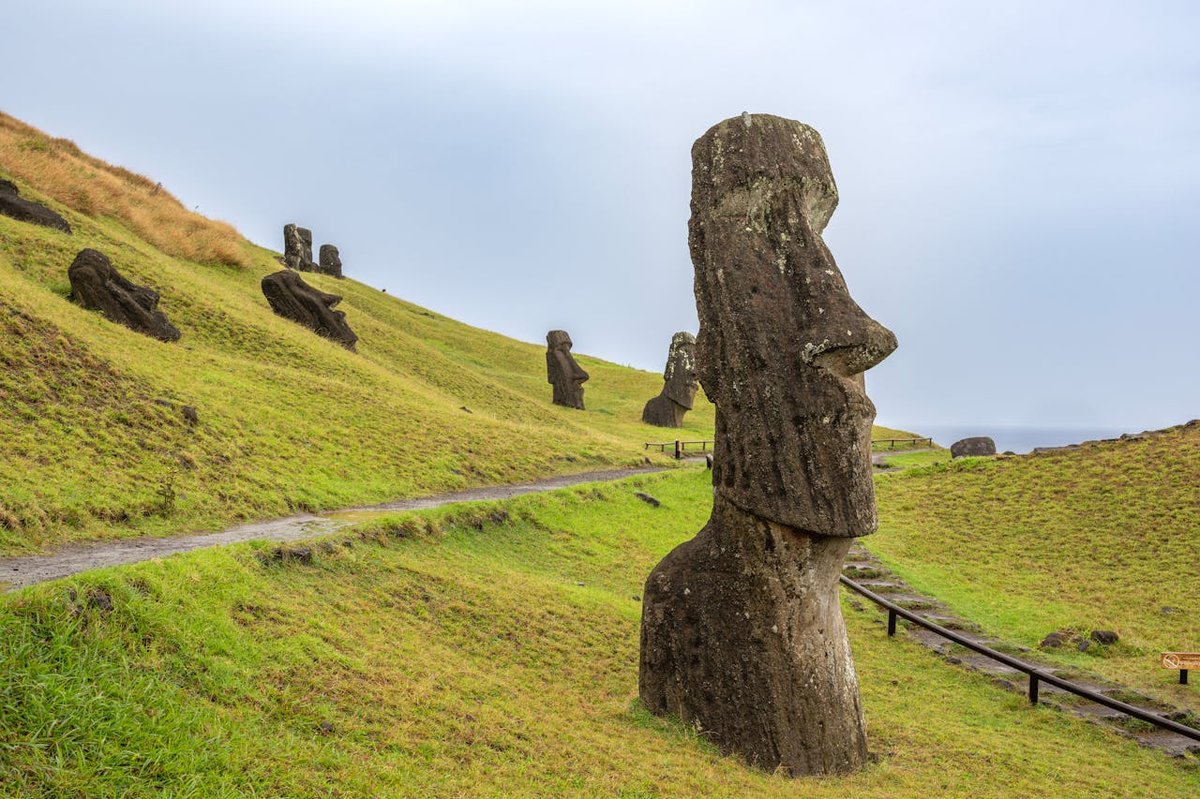
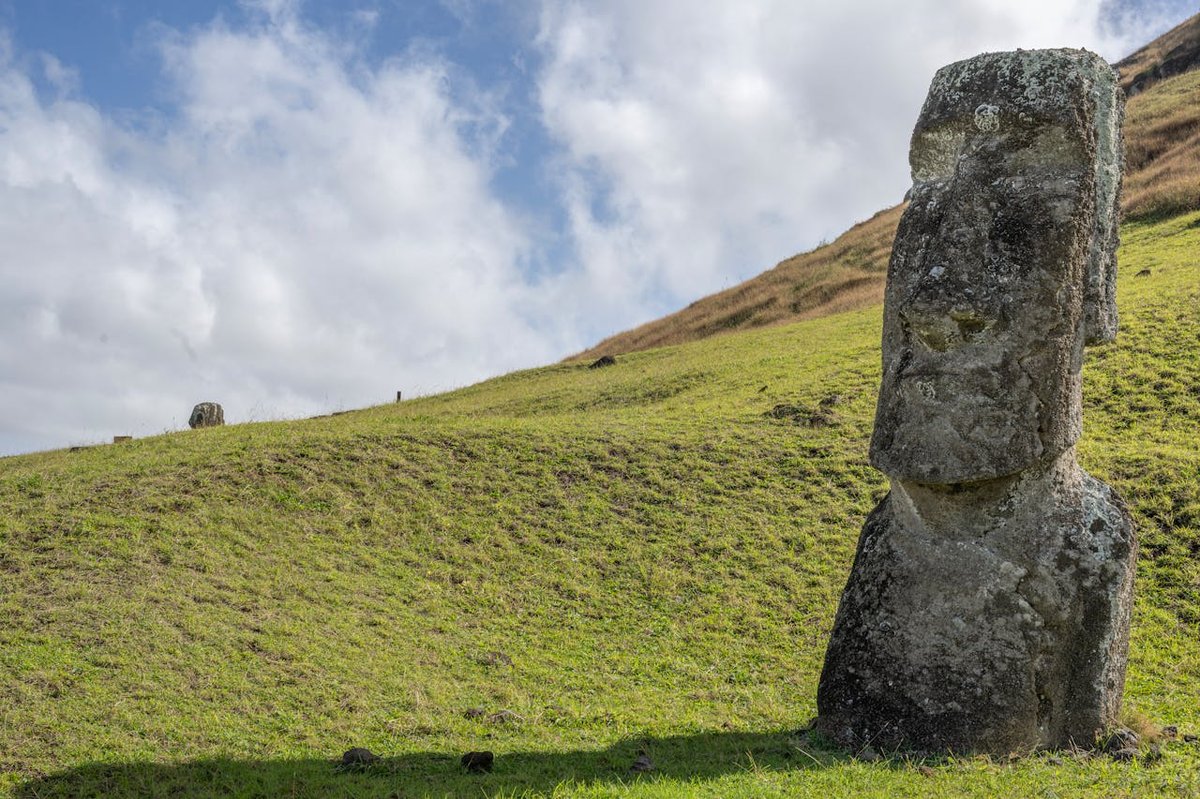
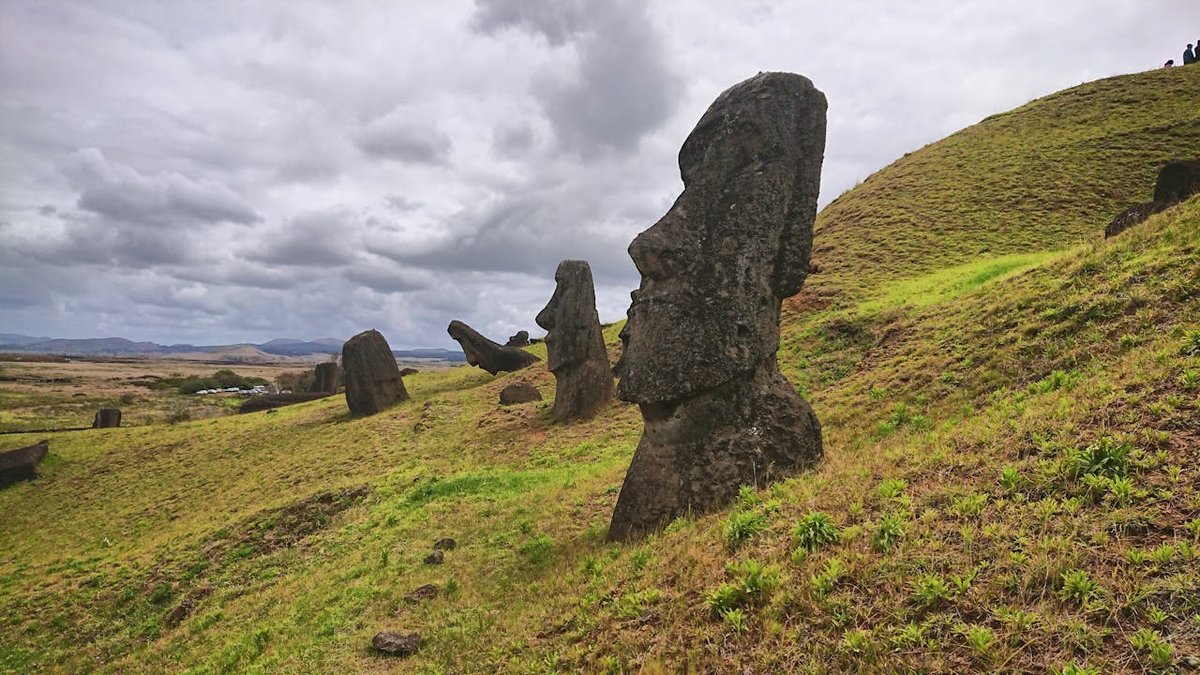
If Tongariki is the postcard, Rano Raraku is the story. This is the volcanic quarry where roughly 95% of all moai on the island were carved, and visiting it is like walking through an abandoned factory floor frozen mid-shift. There are nearly 400 moai here in various stages of completion — some still attached to the bedrock, half-carved into the cliff face. Others are standing upright on the hillside, partially buried by centuries of soil erosion so only their heads and shoulders are visible. A few are lying on their backs or faces, abandoned during transport for reasons nobody can fully explain.
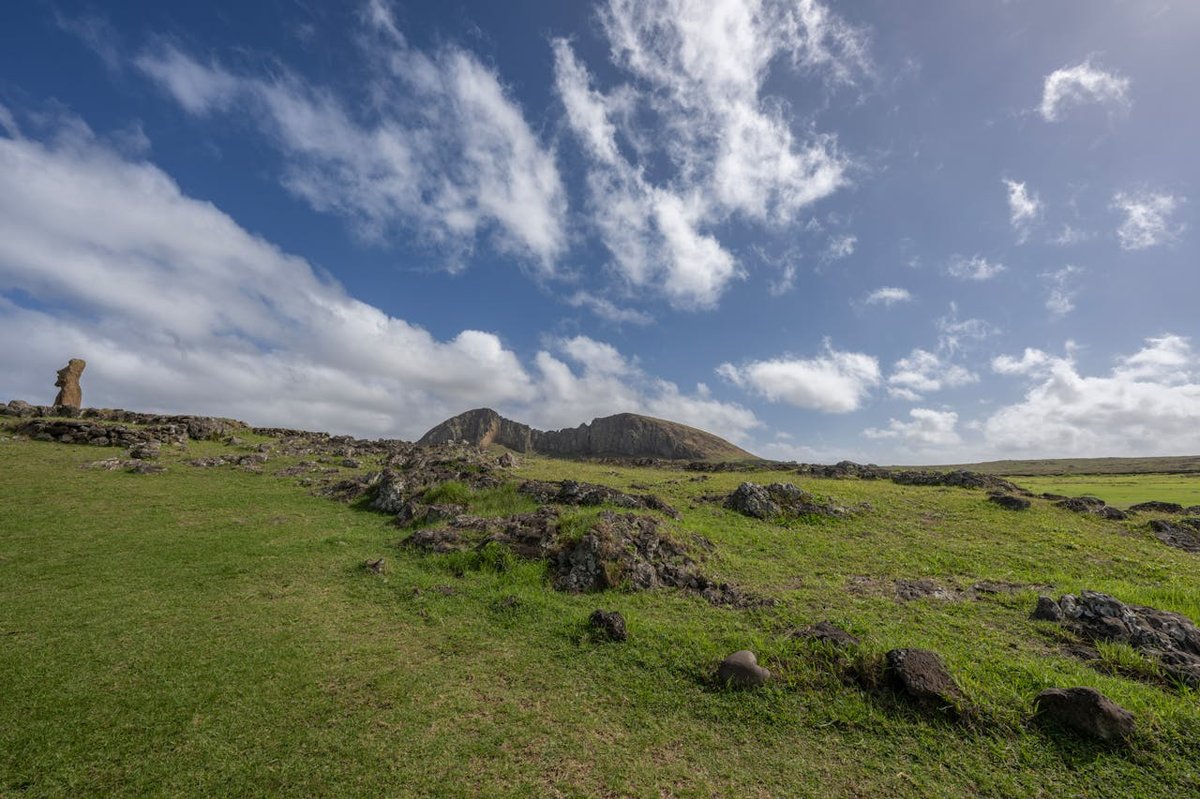
The walk around Rano Raraku takes about an hour and a half if you do not rush it, and you should not rush it. The trail climbs the outer slope of the volcano, passes dozens of moai embedded in the grass at odd angles, then crests the ridge and drops down to a crater lake inside. The lake is quiet and reed-filled, completely different from the stark landscape outside, and there are moai on the inner slope too — facing inward toward the water, as if guarding it.
The thing that got me was the unfinished moai still in the rock. There is one near the top of the quarry that would have been the largest ever carved — about 21 meters tall, roughly the height of a seven-story building. It was never separated from the bedrock. Standing next to it, you can see the tool marks in the rock, the channels where carvers worked with basalt hand picks to shape the tuff stone. The effort required is staggering. Archaeologists estimate each moai took a team of six to twelve carvers about a year to complete, all with stone tools. No metal. No wheels.
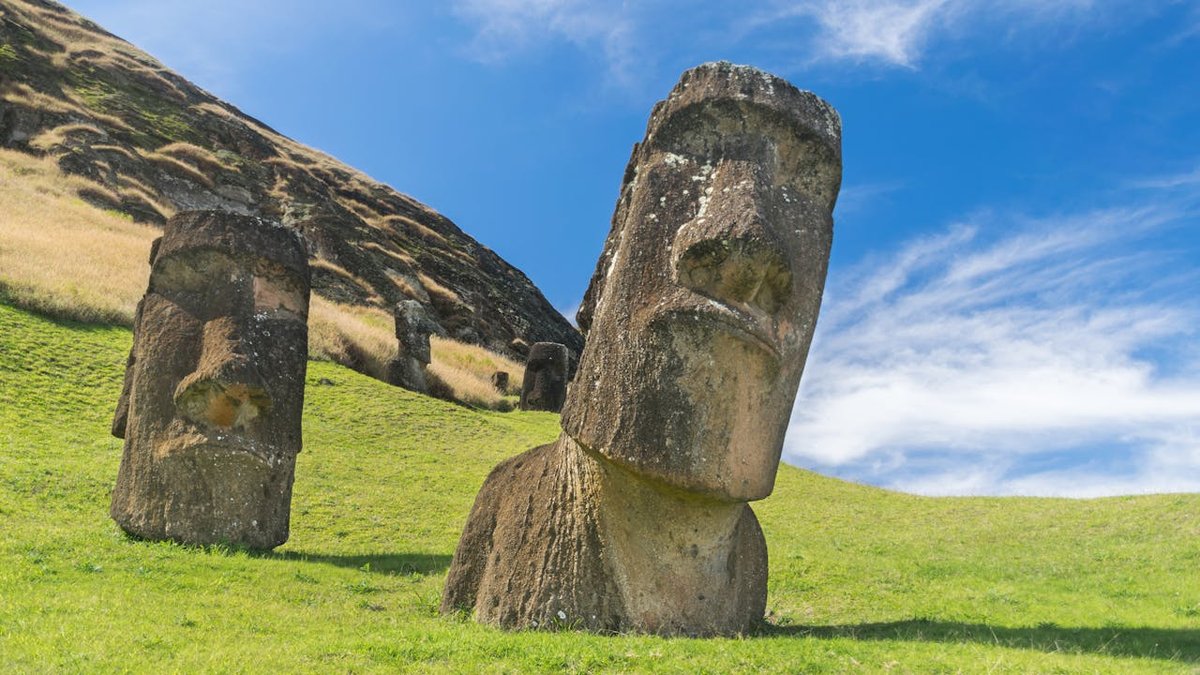
This is where visiting Easter Island starts to shift from tourism to something more like archaeology. You stop looking at the moai as curiosities and start seeing them as evidence of an extraordinary civilization that built on a scale that still does not fully make sense given the resources they had. The cultural depth here runs much deeper than the postcard images suggest.
Ahu Akivi: The Moai That Face the Sea
Almost every ahu on Easter Island faces inland — the moai look over the community they were built to protect, with their backs to the ocean. Ahu Akivi is the famous exception. Seven moai stand in a perfectly straight line, facing directly toward the Pacific. The popular explanation is that they represent the seven explorers sent by the Polynesian king Hotu Matu'a to scout the island before colonization, and they face the sea because they are looking back toward the homeland.
Whether that story is literally true or not, Akivi is different from the coastal sites. It sits inland, on a grassy plain with no dramatic cliff backdrop, and the seven identical-looking moai have a symmetry and purpose that feels more intentional than the scattered figures at Rano Raraku. It is also aligned with the equinoxes — during the autumn and spring equinoxes, the moai look directly at the setting sun. That kind of astronomical precision from a culture without written language or metal tools should stop you in your tracks.
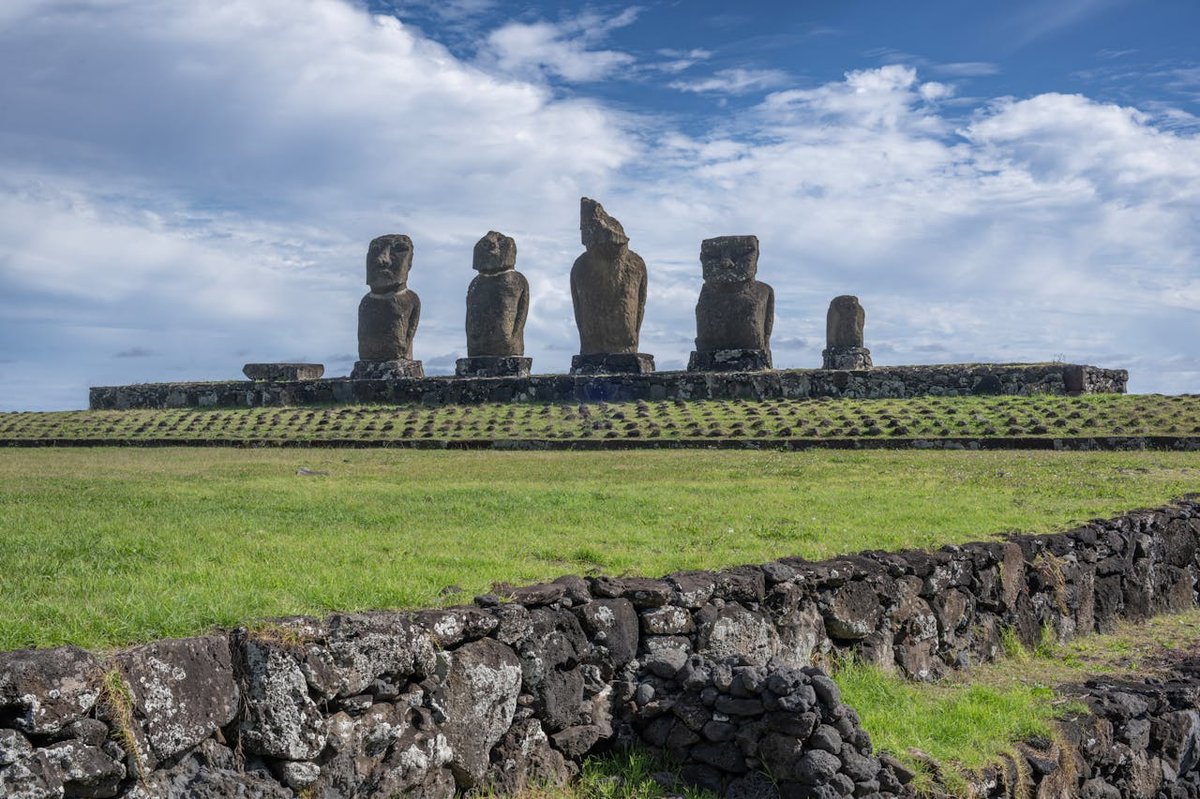
I visited Akivi in the late afternoon when the light was soft and golden, and there were only two other people there. It was the quietest I felt the entire trip. No wind. No sound except grass. The moai just standing there, staring west across the island toward the Pacific, the same direction they have been staring for five hundred years.
Anakena Beach (Yes, Easter Island Has a Tropical Beach)
Most people do not picture a white sand beach when they think of Easter Island, which is exactly why Anakena hits so hard when you arrive. After days of volcanic rock, brown grass, and wind-battered coastline, you round a bend on the north coast road and suddenly there is a crescent of pale sand backed by palm trees with turquoise water. It looks like it was airlifted in from Fiji.
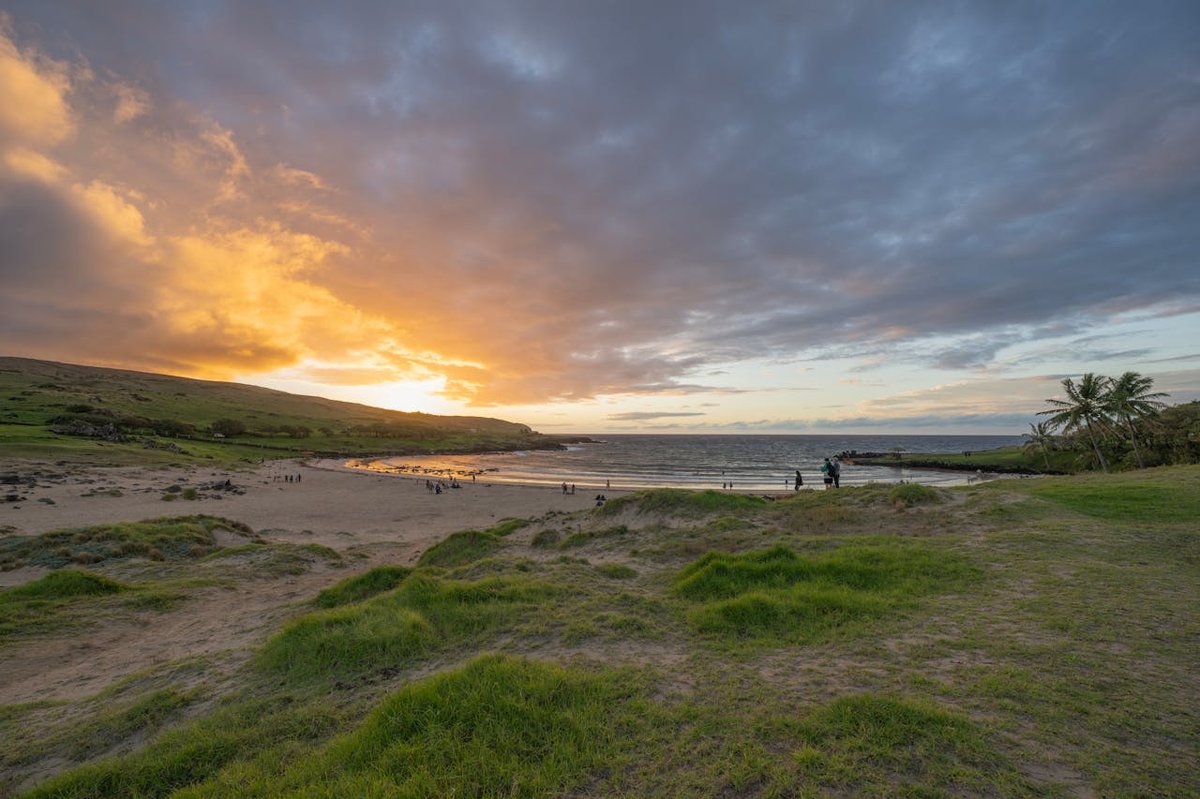
Anakena is the legendary landing site of Hotu Matu'a, the first king of Rapa Nui, and there are moai here too — Ahu Nau Nau, a platform of seven moai right behind the sand, some still wearing their red stone topknots (called pukao). The combination of ancient stone figures and tropical beach is surreal. I ate a packed lunch sitting on the sand with moai over my shoulder and could not quite reconcile the two things in my brain.
The water is swimmable but not warm — this is the South Pacific at 27 degrees latitude, not the equator. I would call it refreshing in summer (January-March) and bracing the rest of the year. There is a small food stand near the parking area that sells empanadas and drinks, but the selection is limited. Bring snacks and plenty of water. There is almost no shade apart from the palm grove, and the sun here is fierce — you are closer to the equator than you think, and the UV index is brutal.
Rano Kau and the Birdman Village of Orongo
The hike up to Rano Kau crater was the most physically demanding thing I did on the island, and also the most visually dramatic moment that had nothing to do with moai. Rano Kau is a massive volcanic crater on the southwestern tip of the island, about a kilometer across, with a freshwater lake at the bottom that is partially covered in floating reed islands. The crater rim drops away on the ocean side in sheer cliffs, and from the top you can see the entire southern coast of the island and three small rocky islets (called motu) just offshore.
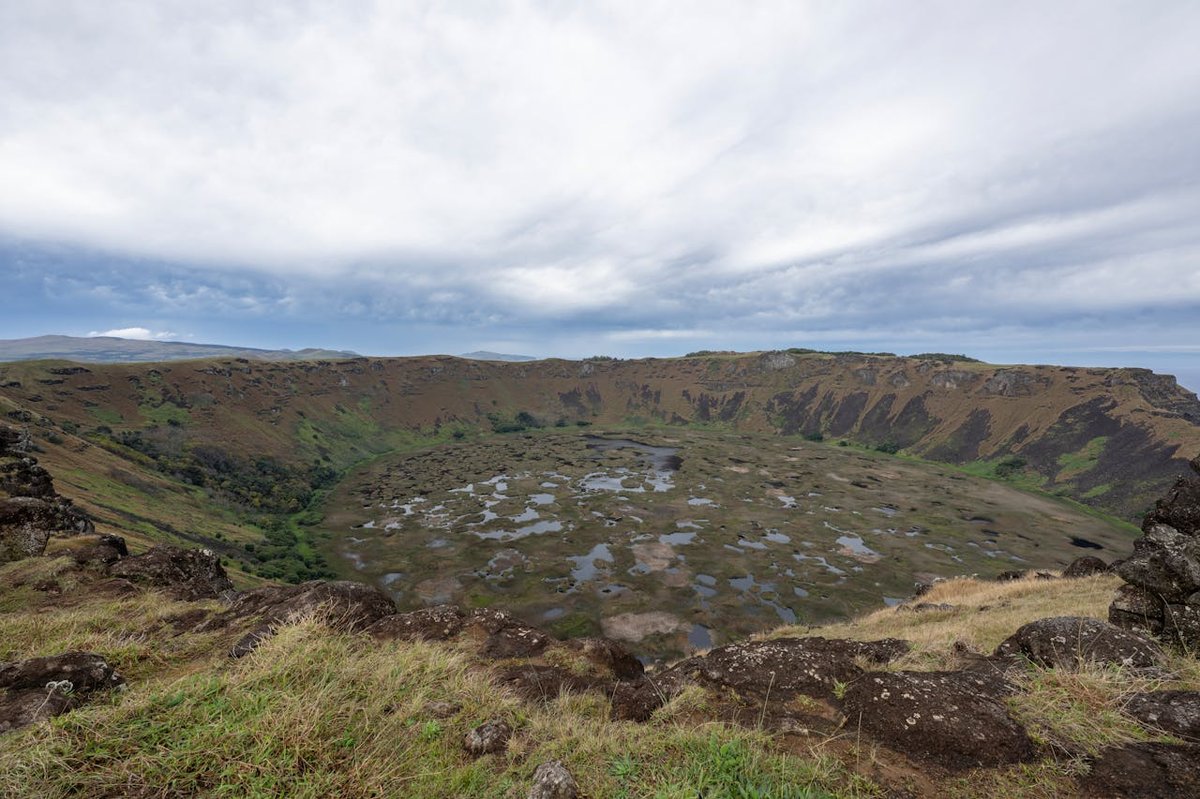
Perched on the narrow rim between the crater and the ocean cliffs sits Orongo, the ceremonial village where the Birdman competition took place. After the moai era ended — likely due to resource depletion and internal conflict — the Rapa Nui people developed a new religious system centered on the worship of the god Makemake and an annual competition to retrieve the first egg of the sooty tern from the offshore islet of Motu Nui.
The competition was insane by any modern standard. Each clan chief nominated a representative — called a hopu manu — who had to climb down the sheer cliffs of Rano Kau, swim through shark-inhabited waters to Motu Nui (about two kilometers offshore), wait for the terns to lay eggs (sometimes for weeks, sleeping on the rocks), find the first egg, strap it to his forehead, swim back, and climb the cliff again. The chief whose representative returned first with an intact egg became the Tangata Manu — the Birdman — and ruled the island for the following year.
Standing at Orongo, looking down at those cliffs and the churning water below and the tiny rocky islets in the distance, I could not imagine volunteering for that swim. People died doing it. The Rapa Nui people who conceived of this competition had a relationship with risk and the ocean and their gods that I can admire from a comfortable distance but will never fully understand.
The stone houses at Orongo have been partially restored, and there are petroglyphs carved into the rocks — Birdman figures with human bodies and bird heads, images of Makemake, and other symbols. The interpretive panels are well done. Give yourself at least two hours for Rano Kau and Orongo combined.
Cycling the Island (My Legs Still Have Opinions About This)
Several people told me to rent a bike and ride the coast. "It is only 60 kilometers around the whole island," they said. "It is mostly flat," they said. Both of these statements are technically true and practically misleading.
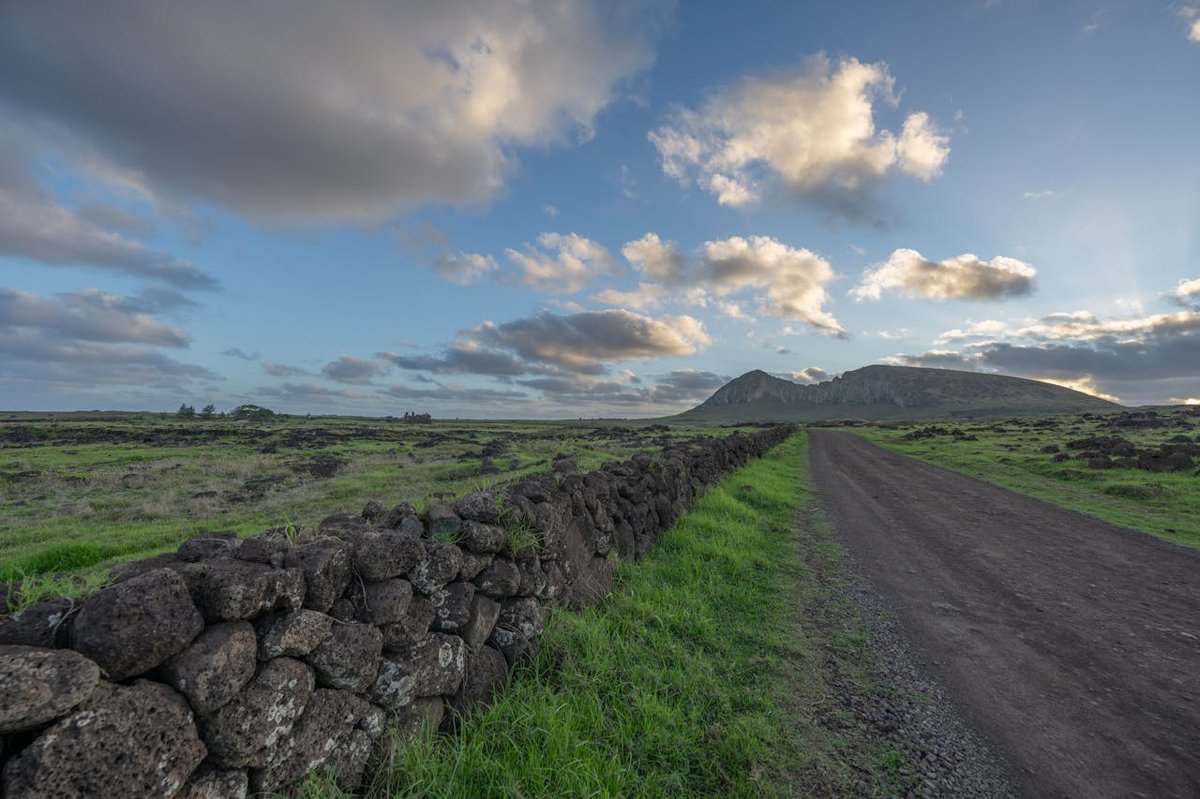
I rented a mountain bike in Hanga Roa for about $25 USD per day and set out early to ride the south coast road to Tongariki and back, roughly 40 kilometers roundtrip. The road is paved for the first section, then turns to packed dirt with patches of loose gravel. The elevation changes are not dramatic — maybe 100-150 meters of total climbing — but the wind is constant and merciless. On Easter Island, the wind is a character, not a weather condition. It blew directly into my face for the entire outbound ride and then, in a beautiful act of meteorological betrayal, shifted direction so it was also in my face on the way back.
That said, cycling is genuinely one of the best ways to see the island if you have the fitness for it. You pass dozens of ahu and moai that the tour vans skip — small platforms with one or two toppled figures, lonely statues standing in fields with no interpretive sign, coastal cliffs with waves smashing against them. You can stop whenever you want, and you feel the scale of the island in a way you do not get from a car. The distances between sites, the emptiness of the interior, the wind — it all registers physically in a way that makes the isolation feel real rather than abstract.
My recommendation: rent a bike for a half day and ride the section of coast between Hanga Roa and Ahu Akivi, which is shorter and less exposed. If you want the full island loop, rent an e-bike — several shops in town now offer them for about $50-60 per day, and the motor assistance on those headwinds is not cheating, it is survival. Check our getting around guide for more options including car rental and guided tours.
Ahu Tahai at Sunset (The Other Must-Do Moment)
If Tongariki sunrise is the marquee event, Ahu Tahai at sunset is its quieter, more intimate counterpart. Tahai is a complex of three ahu right on the waterfront in Hanga Roa — you can walk there from most hotels in ten minutes — and at sunset the entire town seems to congregate on the grass to watch the sun drop behind the moai silhouettes.
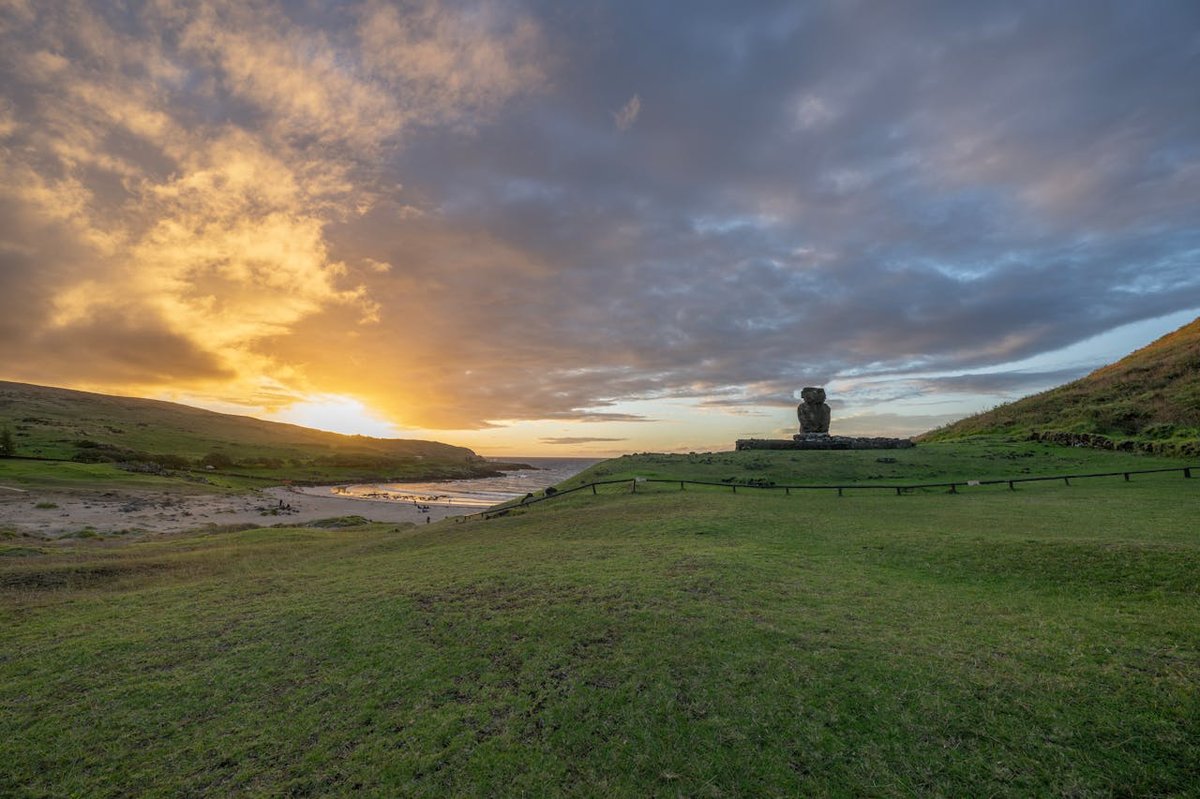
The most photographed moai here is Ko Te Riku, the only moai on the island that has been fully restored with replica eyes — white coral with a red scoria pupil. It looks startlingly alive compared to the blind, empty-eyed figures everywhere else. Seeing it at sunset, when the light is warm and the shadows fill the eye sockets of the other moai but Ko Te Riku stares directly at you, is genuinely unsettling in the best possible way.
I went to Tahai sunset three times during my stay. The first time I took photos. The second time I brought a bottle of wine and sat on the grass. The third time I just sat. That was the best one. There is something about watching the same thing from the same spot in a different mood that makes a place stick in your memory. Tahai stuck.
The Rapa Nui Culture That Tourism Almost Misses
Here is my honest frustration with most Easter Island coverage: it focuses almost entirely on the moai, as if the island is an outdoor sculpture museum and not a living place with a living culture. About 8,000 people live on Rapa Nui, most of them in Hanga Roa, and the Rapa Nui people have a distinct Polynesian language, oral tradition, music, dance, and art practice that is completely separate from mainland Chilean culture.
If your visit overlaps with the Tapati Rapa Nui festival in early February, you will see the culture at full volume. Tapati is a two-week celebration involving traditional sports (banana trunk sliding, reed boat races, triathlon-style competitions), dance performances, body painting, wood carving demonstrations, and a beauty pageant that doubles as a cultural knowledge competition. It is the most important event on the island and it transforms Hanga Roa from a quiet tourist town into something electric. Hotels fill months in advance. If you can time your trip for it, do.
Even outside Tapati, look for cultural shows in the evenings — several restaurants and community centers in Hanga Roa host traditional dance and music performances. The Rapa Nui dance style draws from Polynesian roots but has its own vocabulary and energy. The performances I saw were not watered-down tourist entertainment — the dancers were clearly performing for themselves as much as for the audience, and the intensity showed.
The Rapa Nui people's relationship to their island is more complicated and fraught than most tourist materials acknowledge. The island was annexed by Chile in 1888, and for much of the 20th century, the Rapa Nui people were confined to Hanga Roa while the rest of the island was leased to a sheep-ranching company. Full Chilean citizenship was not granted until 1966. There are ongoing political tensions around land rights, immigration, and self-determination. You will hear about this if you spend time talking to locals, and you should listen.
Eating on Easter Island (Bring Your Wallet)
I will be straight with you: food on Easter Island is expensive. This is a tiny island 3,700 kilometers from the nearest continent, and almost everything except fish has to be flown in. A basic restaurant dinner with one main course and a drink will run you $25-40 USD. A nicer seafood dinner is $50-70. A simple lunch — empanada, sandwich, something quick — is $12-18.
The good news: the fresh fish is excellent and it is the one thing that is both local and (relatively) affordable. Tuna in particular is everywhere — raw as ceviche or tataki, grilled, in empanadas, on pizza. The ceviche de atun at several Hanga Roa restaurants was some of the best I have had in South America, citrusy and clean with that deep-red fresh-caught tuna color that you almost never get at home. If you eat one thing on Easter Island, eat the ceviche. Visit our Chile food and drink guide for more on Chilean cuisine.
To keep costs down, the mini-markets in Hanga Roa sell bread, cheese, fruit, canned goods, and basic supplies at inflated but manageable prices. I made my own breakfast and packed lunches for day trips, which saved a meaningful amount of money over the week. There is no McDonald's. There is no Starbucks. There are a handful of good restaurants, a fish market, and mini-markets. Plan accordingly.
| Item | Typical Cost (USD) |
|---|---|
| Restaurant dinner (main + drink) | $30-50 |
| Ceviche or fish lunch | $15-25 |
| Empanada from a stand | $5-8 |
| Beer at a restaurant | $5-8 |
| Mini-market groceries (per day) | $15-20 |
| Bottled water (1.5L) | $3-4 |
The Practical Stuff (Tickets, Budget, How Many Days)
Rapa Nui National Park Ticket
To visit most archaeological sites on the island, you need a Rapa Nui National Park ticket, which costs $80 USD for foreign tourists (about 80,000 CLP — it fluctuates with exchange rates). As of my visit, you purchase this online before arrival or at the CONAF office in Hanga Roa. The ticket is valid for ten days and covers all major sites including Tongariki, Rano Raraku, Orongo, Anakena, and Ahu Akivi. Some sites like Rano Raraku and Orongo can only be visited once per ticket — they scan you in and that is your one shot.
This is not optional. Rangers check tickets at every major site, and the fines for visiting without one are steep. The money funds conservation, which the island desperately needs — erosion, tourism wear, and weathering are constant threats to the archaeological sites. Eighty dollars felt like a lot until I saw what it was protecting.
How Many Days Do You Need?
Four days is the sweet spot for most visitors. That gives you time for Tongariki sunrise, Rano Raraku, the south coast sites, Rano Kau and Orongo, Anakena, Ahu Tahai sunset, and a day of either cycling, diving, or just wandering Hanga Roa. Three days is doable if you move fast but you will feel rushed. Five to six days is luxurious and lets you revisit favorites, catch bad-weather backup days, and slow down enough to actually feel the isolation rather than just photograph it.
If you are building this into a larger Chile trip, our two-week Chile itinerary shows how to fit Easter Island into a broader routing. The best time to visit Chile generally aligns well with Easter Island's pleasant season too.
Accommodation
Almost all accommodation is in Hanga Roa, and options range from backpacker hostels ($25-40 USD per night for a dorm bed) to mid-range guesthouses ($80-150 for a double room) to a handful of upscale hotels ($200-400+). There is no resort-style mega-hotel. The most common setup is a small family-run guesthouse or cabana — clean, simple, often with breakfast included, usually run by someone who will hand-draw you a map of the island on a piece of paper and tell you where to eat.
I stayed at a mid-range guesthouse for about $110 per night and it was perfect — private room, decent breakfast, a five-minute walk to the waterfront. The owner arranged my airport transfer and recommended a guide. On Easter Island, the accommodation is part of the social infrastructure — your host will likely know everything and everyone, and their recommendations will be better than anything on TripAdvisor.
Book ahead. This is not a place where you show up and wing it, especially during December-March or around Tapati. The island limits tourist numbers through the accommodation requirement — you literally cannot enter without a confirmed booking — so everything fills up. Two months ahead is comfortable. One month is cutting it close in peak season.
Guides and Tours
You do not strictly need a guide to visit most sites — the park ticket grants independent access. But I strongly recommend hiring a local guide for at least one full day. The archaeological sites have minimal signage, and without context, you are looking at impressive statues without understanding why they are impressive. A good guide turns Rano Raraku from "a hill with statues" into "the place where a civilization pushed stone technology to its absolute limit and then abandoned it mid-stroke." That narrative transformation is worth the money.
Full-day guided tours run about $80-120 USD per person for a small group, or $150-250 for private. Half-day tours are proportionally cheaper. Book through your accommodation or directly with a local guide — many of the best guides are Rapa Nui themselves and bring personal family connections to the sites and stories.
Overall Budget
| Category | Budget (per day, USD) | Mid-range (per day, USD) |
|---|---|---|
| Accommodation | $30-40 | $100-150 |
| Food | $25-35 | $50-70 |
| Transport (bike/car rental) | $15-25 | $40-70 |
| Guide/tours | $0-30 | $40-80 |
| Daily total | $70-130 | $230-370 |
Add the park ticket ($80 one-time) and flights ($300-600 roundtrip from Santiago) on top. Easter Island is not cheap, full stop. But I have spent more money on destinations that gave me less. The Chile money and costs guide has more detail on budgeting for the whole country.
The Sites Most Visitors Miss
Ana Kai Tangata (The Cannibal Cave)
A short walk south of Hanga Roa, this sea cave has a painted ceiling depicting birds — faded but visible — and a name that translates to either "cave where men eat" or "cave that eats men," depending on who you ask. Either way, the cave itself is dramatic: a wide opening at the base of sea cliffs with waves crashing at the entrance and painted rock overhead. It is free to visit, takes twenty minutes, and almost nobody goes there.
The North Coast Road
Most tours follow the south coast road from Hanga Roa to Tongariki. The north coast is quieter and wilder — scattered ahu, coves, and the remains of stone chicken houses (called hare moa) that the Rapa Nui used to protect their poultry from theft. Not glamorous, but it gives you a sense of how people actually lived here, not just how they worshipped.
Mauna Terevaka
The highest point on the island at 507 meters. The hike is about three hours roundtrip from the trailhead, through open grassland with no shade. From the top, you can see the entire island and nothing but ocean in every direction. The loneliness of that view — land in every direction stopping, ocean in every direction continuing forever — is the most effective way to feel what "the most remote inhabited island" actually means.
What I Would Do Differently
I would bring better sun protection. I thought I was prepared — SPF 50, a hat, sunglasses — but the UV on Easter Island is stronger than I expected and I got burned through my shirt sleeves on the cycling day. Bring a lightweight long-sleeve UPF shirt. Your arms will thank you.
I would book an extra day. Four days was enough. Five would have let me revisit Rano Raraku in different light, take a slower second ride along the north coast, and not feel like I was optimizing every hour. The island rewards slowness more than most places.
I would bring more cash. ATMs exist in Hanga Roa but they run out of bills, especially on weekends when the resupply has not come in yet. Cards are accepted at most restaurants and tour agencies, but not everywhere. Bring at least $200 USD equivalent in Chilean pesos as backup.
I would spend more time in Hanga Roa itself. I treated the town as a base and spent every day out at sites. But Hanga Roa has a small but interesting market, a well-done anthropological museum (Museo Rapa Nui), a pretty harbor, and a pace of life that is worth experiencing rather than just sleeping through. Sitting at the harbor with a beer, watching fishing boats come in at dusk, was one of the most peaceful moments of the trip.
Quick Tip
Bring a headlamp or flashlight. Several interesting caves and lava tubes on the island have no artificial lighting, and your phone flashlight is not enough for the longer ones. A proper headlamp opens up sites like Ana Te Pahu (a lava tube garden) that most tourists skip because they cannot see inside.
The Last Morning
On my final day, I woke up early without an alarm — habit by then — and walked to Ahu Tahai one more time. No camera. No plan. It was overcast and the light was flat, which meant there were no other tourists there at 6:30am. I sat on the grass near Ko Te Riku and watched the moai in the grey morning and thought about what this island had been. A civilization that carved nine-hundred-plus giant stone figures, moved them across kilometers of rough terrain without wheels or draft animals, raised them onto platforms, gave them eyes, and then knocked them all down during a period of crisis that may or may not have been caused by the very effort of building them in the first place. The debate is ongoing and I am not an archaeologist. But sitting there, looking at the one moai with restored eyes looking back at me, I felt the weight of what this place represents — the ambition and the collapse and the survival and the rebuilding. All on a rock in the middle of the Pacific, 3,700 kilometers from the nearest anything.
The flight back to Santiago felt longer than the flight out. Five and a half hours over open water, the island shrinking behind us until it was a speck and then nothing, and then just ocean for hours. I ate the in-flight meal and thought about how the first Polynesian navigators made that crossing in canoes, following stars, reading wave patterns, carrying everything they would need to start a civilization. They found a 163-square-kilometer triangle of volcanic rock and turned it into something the whole world knows about. I stared out the window at the Pacific and felt small in the exact way that good travel is supposed to make you feel.
Go. It is far and it is expensive and it is worth every kilometer and every dollar. Easter Island is the kind of place that rearranges how you think about what humans are capable of, and you cannot get that from a documentary.